The 'Luxe-Bohemian' Wedding: Why Unique Gemstones are Replacing Traditional Diamonds
Something has shifted in bridal jewellery, and it has been building for longer than the trend forecasters would have you believe. Couples who once walked into a jeweller with a fixed idea of a round brilliant diamond solitaire are now arriving with photographs of velvet-green emeralds, inky sapphires, and pale pink morganites. They are asking different questions. They want to know about origin, about meaning, about the story behind the stone rather than simply its carat weight.
The 'luxe-bohemian' wedding aesthetic — that particular blend of opulence and earthiness, of meadow flowers alongside silk, of candlelight in ancient barns — has given couples permission to break from convention in ways that feel genuinely personal rather than merely eccentric. And nowhere is that break more visible, or more lasting, than in the choice of engagement ring.
This is not a fleeting Instagram trend. It is a deeper recalibration of what an engagement ring is supposed to represent — and the gemstones driving it are as varied and characterful as the couples choosing them.
What 'Luxe-Bohemian' Actually Means for Jewellery
The term 'luxe-bohemian' has been used loosely enough to mean almost anything, so it is worth being specific about what it means when applied to alternative bridal jewellery. It is not about looking undone or rustic. It is about the meeting of quality and individuality — pieces that are clearly fine jewellery, crafted with skill and care, but that carry a distinctly personal spirit rather than a corporate uniformity.
In practice, this translates to rings that feel like they could have been unearthed rather than manufactured. Organic settings that echo natural forms. Stones with visible character — inclusions, colour zoning, the faint flicker of a phenomenon like asterism or adularescence. The ring looks like it was made for one specific person, because it was.
Coloured gemstones fit this aesthetic instinctively. A diamond, however beautiful, is a commodity with a standard grading system. An emerald, a sapphire, or a parti-coloured tourmaline exists as an individual. No two are the same, and that singularity carries meaning for couples who feel their relationship is equally irreducible to a formula.
The Rise of the Emerald Engagement Ring
Of all the coloured stones gaining ground in the alternative bridal market, emerald has perhaps the most compelling story. It occupies a peculiar space in the collective imagination — associated simultaneously with ancient royalty, with lush tropical abundance, and with a kind of cool, intellectual elegance that sets it apart from the warmer romance of rubies or the celestial associations of sapphires.
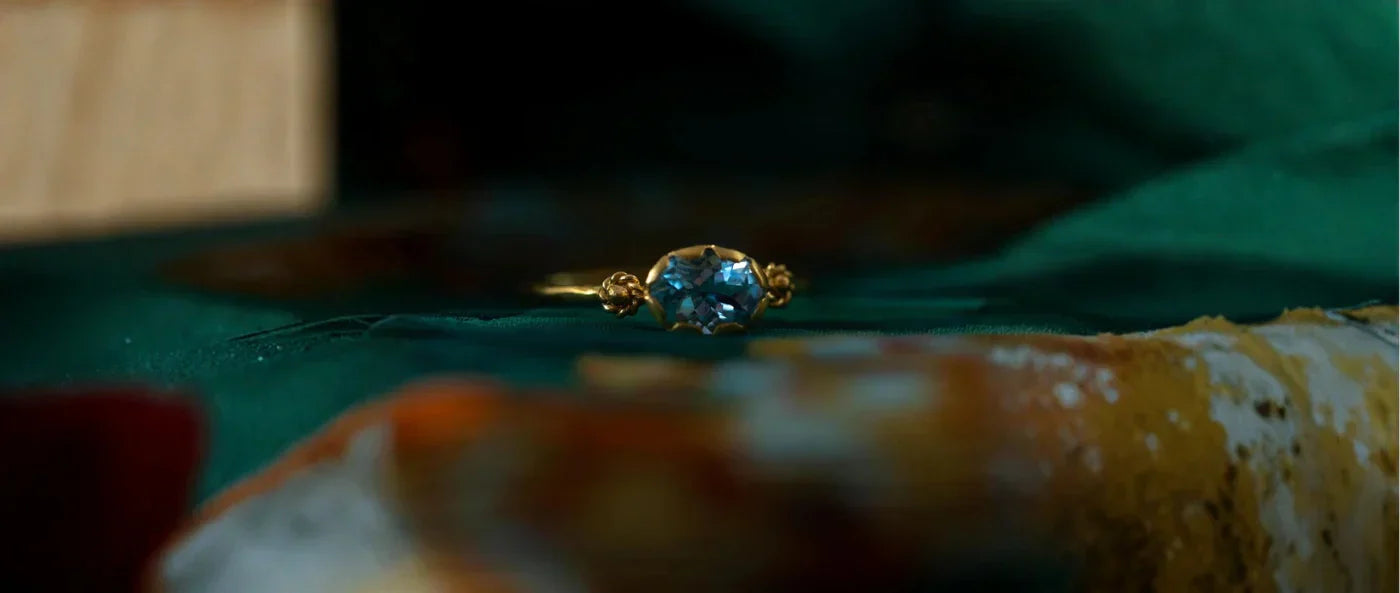
The emerald engagement ring has moved decisively from novelty to genuine trend. Part of this is aesthetic: deep green sits beautifully against yellow gold, particularly in antique or East-West elongated cuts that show off the stone's depth. Part of it is cultural: several high-profile engagements in recent years have brought emeralds into wider consciousness, and once people see them properly displayed, the appeal is immediate.
But there is something else going on too. Emeralds are imperfect in a way that diamonds traditionally are not. Where a heavily included diamond would be considered flawed and priced accordingly, the same inclusions in an emerald — what gemologists call its 'jardin', meaning garden — are understood as part of the stone's identity. Couples drawn to the luxe-bohemian aesthetic respond to this. The imperfection is not something to hide. It is something to choose.
Colombian emeralds remain the benchmark for depth of colour, but Zambian stones — known for their slightly bluish-green saturation and often remarkable clarity — have developed a devoted following among those who engage seriously with gemology. For those commissioning bespoke pieces, the origin of the stone has become part of the narrative of the ring itself.
Beyond Emerald: The Full Spectrum of Alternative Bridal Stones
While emeralds have claimed significant attention, the alternative bridal movement is properly understood as an entire shift in how couples approach the choice of stone — not a swap from one default to another. The range of gemstones now being set into engagement rings is extraordinary, and each carries its own aesthetic character and symbolic weight.
Sapphires, long established as a legitimate bridal choice, have expanded well beyond the royal blue most people picture. Padparadscha sapphires — those extraordinary salmon-pink stones with their sunset warmth — have become genuinely sought-after. Teal sapphires, with their mix of blue and green, feel particularly at home within the luxe-bohemian palette. Parti sapphires, which show multiple colours within a single stone, are genuinely unique: no two are identical.
Morganite, with its soft blush warmth, suits rose gold settings almost uncannily well and has drawn in couples who want something romantic without the formality of a diamond. Alexandrite — one of the rarest gemstones in the world, with its extraordinary colour change from green in daylight to red under incandescent light — speaks to those who want a stone with a genuine story. Montana sapphires, ethically mined in the United States, appeal to couples for whom provenance is a non-negotiable.
Opals deserve particular mention. Once considered unlucky in Victorian superstition (a legend largely invented by a diamond industry keen to protect market share), opals have reclaimed their rightful status as one of the most visually spectacular gemstones in existence. A high-quality Lightning Ridge black opal, with its rolling play-of-colour across a dark body tone, is unlike anything else in nature. They require more care than a harder stone, but for the right person, that is not a deterrent — it is part of the relationship.
See the latest engagement rings collection: https://emmachapmanjewels.com/collections/engagement-rings
Why Couples Are Moving Away From the Diamond Default
It would be reductive to suggest that diamonds have simply fallen out of favour. Fine diamonds remain magnificent stones and the right choice for many couples. What has changed is the assumption — the automatic, unexamined default — that a diamond is the only option worth considering for an engagement ring.
Several forces have converged to disrupt that assumption. The rise of ethical consumerism has made the origin of diamonds a live conversation in a way it was not a generation ago. Lab-grown diamonds have complicated the market by offering chemically identical stones at a fraction of the price, which has caused some couples to question the investment logic of mined diamonds entirely. And social media has made the range of alternatives viscerally visible in a way that gemology books and trade shows never managed.
There is also a generational dimension. Many couples getting engaged today grew up with the internet and have developed a healthy scepticism towards manufactured conventions. The 'two months' salary' rule, invented by a diamond marketing campaign in the mid-twentieth century, reads transparently as what it always was. Couples who recognise this often feel a particular freedom to make choices that are genuinely theirs rather than ones they were sold.
The Craft of Setting Coloured Stones
Choosing a coloured gemstone for an engagement ring demands something different from the jeweller than setting a diamond. Diamonds are relatively uniform in their demands: they are hard, they are bright, and a well-cut stone in a simple setting will reliably dazzle. Coloured stones require a more nuanced response.
The colour of the metal has a profound effect on how a coloured stone reads. Yellow gold warms a green emerald and deepens a blue sapphire. Rose gold flatters pink and peachy stones. Platinum and white gold allow a stone's colour to speak without interference, which suits particularly saturated gems. Getting this right requires genuine expertise and an eye trained on coloured stones specifically.
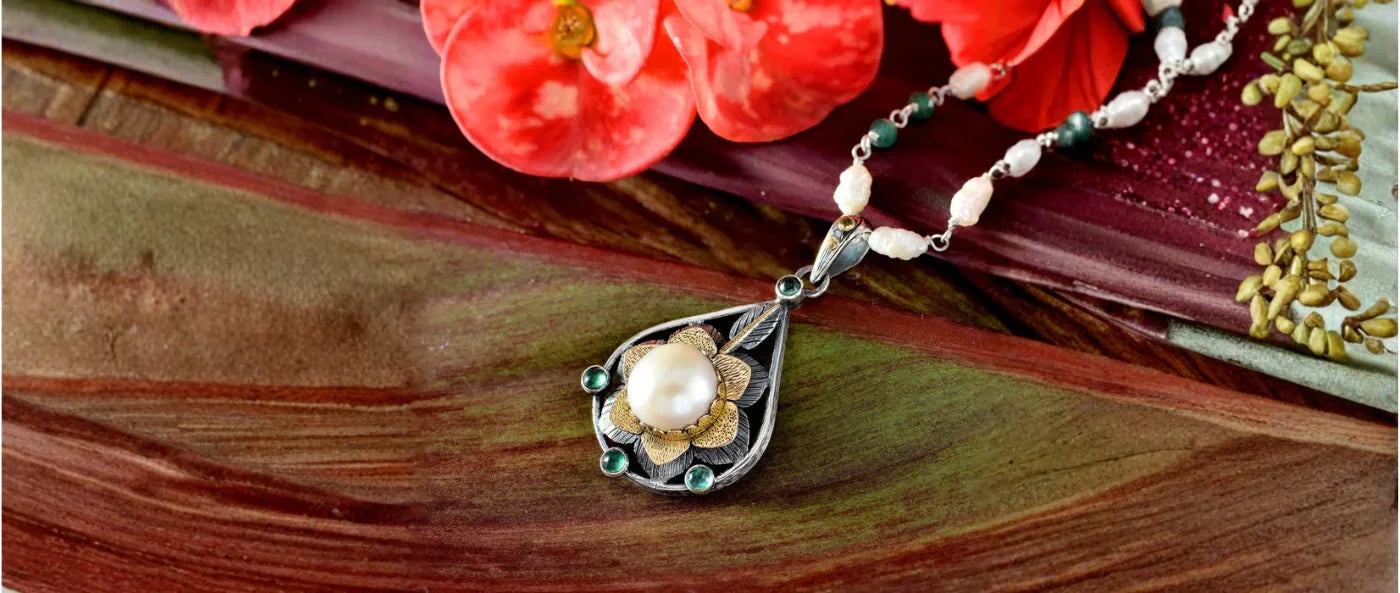
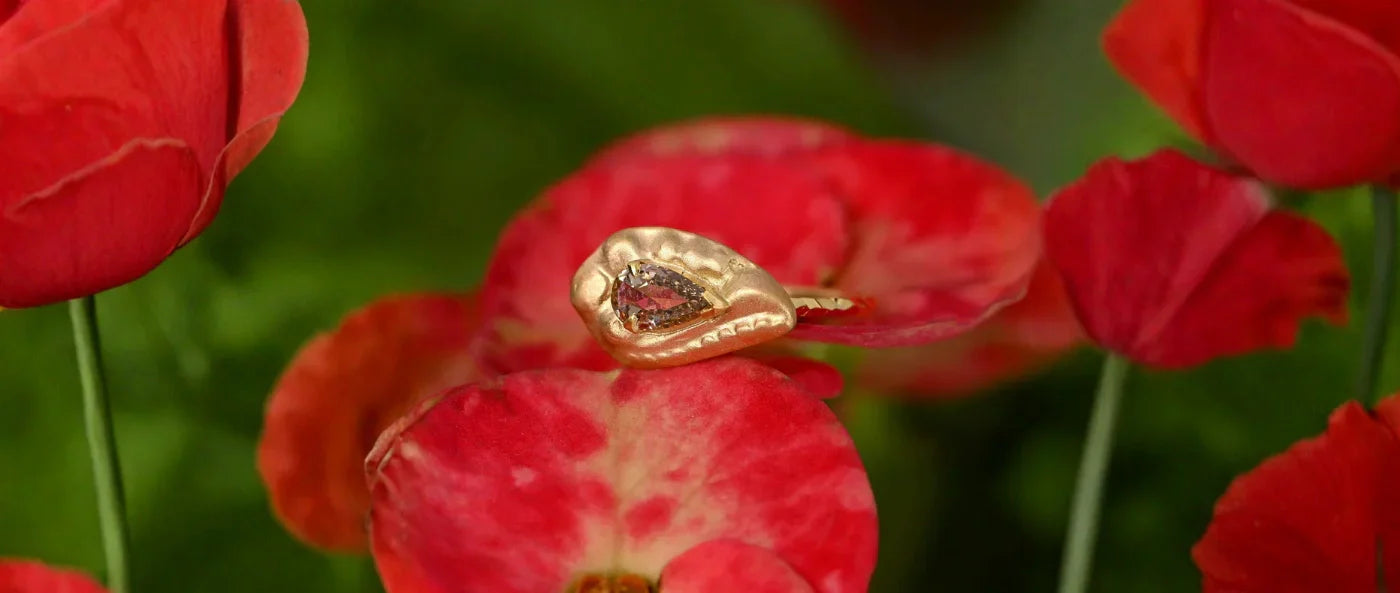
The setting style matters enormously too. Coloured stones, particularly those with strong inclusions or unusual cuts, often benefit from settings that feel organic rather than architectural — bezel settings, rub-over collets, or delicate claw configurations that echo natural forms. Emma Chapman jewels has built its approach around this kind of bespoke sensitivity: the setting should feel as though it grew around the stone rather than being imposed upon it.
Cut choices are also more expressive with coloured stones. Where diamond cutting is primarily about maximising the return of white light, cutting a coloured stone is about revealing and concentrating its specific colour. Cutters have more latitude to follow the natural crystal, which is why you see more unusual shapes — kite cuts, hexagons, freeform cuts — in the coloured stone world than in diamonds.
Styling the Luxe-Bohemian Ring Within a Wedding Aesthetic
An engagement ring chosen within the luxe-bohemian framework does not exist in isolation — it becomes part of a wider visual language that runs through the wedding itself. The ring that works beautifully at an outdoor ceremony in a wildflower meadow, or at a dinner in a candlelit Georgian townhouse, will look entirely at home alongside loose flower crowns, unstructured silk gowns, and tables set with mismatched vintage glassware.
Stacking and layering rings has become part of the broader story. An engagement ring with an unusual stone is often paired with a curved or shaped wedding band that follows its contour, and with an eternity ring or anniversary band added later. The cumulative effect is a hand that tells a personal story rather than displaying a uniform set.
The growing interest in vintage and antique settings also feeds naturally into this aesthetic. A stone in an Edwardian milgrain setting or a Georgian closed-back collet looks extraordinary on a modern hand precisely because of the contrast. Couples working with jewellers who understand this history can access settings with genuine provenance, into which a contemporary stone or an heirloom gem can be placed with care.
Frequently Asked Questions
1. Are coloured gemstone engagement rings as durable as diamond rings?
Durability varies by stone. Diamonds score 10 on the Mohs hardness scale, making them the hardest natural material. However, several alternative stones are entirely practical for everyday wear. Sapphires and rubies score 9, making them excellent choices for rings worn daily. Emeralds score 7.5 to 8 but have natural inclusions that can make them more vulnerable to knocks — they benefit from protective settings and sensible care. Opals and moonstones are softer and suit those who are mindful about their jewellery. A good jeweller will always discuss the practical implications of your chosen stone honestly.
2. What makes an emerald engagement ring a good choice for the alternative bridal aesthetic?
Emeralds carry a depth of colour and a natural imperfection — their characteristic inclusions, known as jardin — that makes each stone genuinely individual. They sit beautifully in yellow gold settings, particularly in elongated cuts that emphasise their colour. For couples who want a ring that feels personal, historic, and distinctly non-corporate, an emerald offers all of that. The stone has been used in fine jewellery for thousands of years, which gives it a weight and resonance that feels meaningful rather than merely fashionable.
3. Is a coloured gemstone ring appropriate as an engagement ring, or is it just a fashion choice?
Engagement rings set with coloured stones have existed for centuries — considerably longer than the diamond-as-default convention, which is largely a twentieth-century construction. Some of the most famous engagement rings in history have featured sapphires, rubies, and emeralds. The choice of stone is entirely personal and has no bearing on the sincerity or permanence of the commitment it represents. A coloured stone chosen with care and worn with love is as meaningful an engagement ring as any diamond.
4. What is the difference between a natural and a treated gemstone?
Most coloured gemstones undergo some form of treatment to enhance their appearance. Heat treatment is standard practice for sapphires and rubies and is widely accepted within the trade — it stabilises colour and improves clarity without fundamentally altering the stone. Emeralds are almost universally oiled or resin-filled to improve the appearance of surface-reaching inclusions; the extent of this treatment affects value. Synthetic treatments such as beryllium diffusion or fracture filling are more significant interventions that should be disclosed. A reputable jeweller will be transparent about treatment status and provide laboratory certificates where appropriate.
5. How does the cut of a coloured gemstone differ from a diamond cut?
Diamond cutting prioritises the return of white light through the stone — the brilliant cut, in its various forms, is designed to maximise sparkle through precise mathematical proportions. Coloured gemstone cutting has a different primary goal: to reveal and concentrate the stone's colour. This gives cutters more freedom to follow the natural crystal shape and to use cuts that might be considered unusual in diamonds — elongated cushions, hexagons, kite shapes, portrait cuts. The result is that coloured stones often feel more individual and expressive than diamonds of equivalent quality.
6. Can I use a family heirloom gemstone in a new setting?
Resetting an inherited or heirloom gemstone is a meaningful and entirely achievable undertaking. The process involves having the stone professionally assessed and cleaned, and then working with a jeweller to design a setting that suits both the stone and your personal aesthetic. It is worth having any stone tested by a gemmologist before resetting, as some older stones may have been misidentified or may benefit from professional conservation. The result — a contemporary piece that carries genuine family history — can be deeply significant.
7. What should I budget for an alternative gemstone engagement ring?
The range is genuinely wide. Fine coloured gemstones — a high-quality Colombian emerald, a padparadscha sapphire, or an alexandrite — can exceed the price of equivalent-weight diamonds at the top end of the market. However, there are many beautiful coloured stones available at accessible price points: teal sapphires, morganites, and certain tourmalines can offer extraordinary colour and character at significantly less than a comparable diamond. The total cost of a bespoke ring depends on the stone, the metal, and the complexity of the setting — a detailed conversation with your jeweller at the outset will help you understand the options within your budget.
8. How do I care for a coloured gemstone engagement ring?
Care requirements vary by stone. Sapphires and rubies are robust and can be cleaned with warm soapy water and a soft brush. Emeralds should be cleaned more gently — ultrasonic cleaners and steam are not recommended, as these can affect the oil or resin filling present in most stones. Opals are sensitive to sudden temperature changes and prolonged exposure to dry conditions; they should be removed before swimming or bathing. As a general principle, it is worth having any fine gemstone ring professionally checked and cleaned annually, and removing it before activities that risk impact.
9. Why is bespoke the right approach for an alternative bridal ring?
Off-the-shelf ring designs are built around standard stone shapes and sizes, which means that a genuinely unusual gemstone — with its own particular dimensions, colour distribution, and character — will rarely find its ideal setting on a ready-made shelf. Bespoke commission allows the jeweller to respond to the specific stone, designing a setting that suits its proportions and enhances its best qualities. It also allows for proper conversation about how the ring will be worn, what it needs to stand up to, and what aesthetic it should carry. The result is a piece that feels entirely resolved rather than approximate.
The shift towards coloured gemstones in bridal jewellery is not a rejection of tradition — it is a return to a much older tradition, one that existed long before the diamond industry reshaped expectations. Emma Chapman jewels works with couples who want to engage seriously with that history and with the remarkable stones the world produces. The ring you wear every day for the rest of your life deserves that level of thought.