Beyond the Clear Diamond: Why 'Expressive Colour Theory' is Dominating Fine Jewellery
There was a time when the story a diamond had to tell began and ended with its clarity. Colourless, cold and endlessly matchable, a diamond's entire job was to never clash with anything. That story is changing, and it's changing fast. Sit in on a conversation with any of the industry's most respected jewellery houses this season and you'll hear the same two words surface again and again: considered colour.
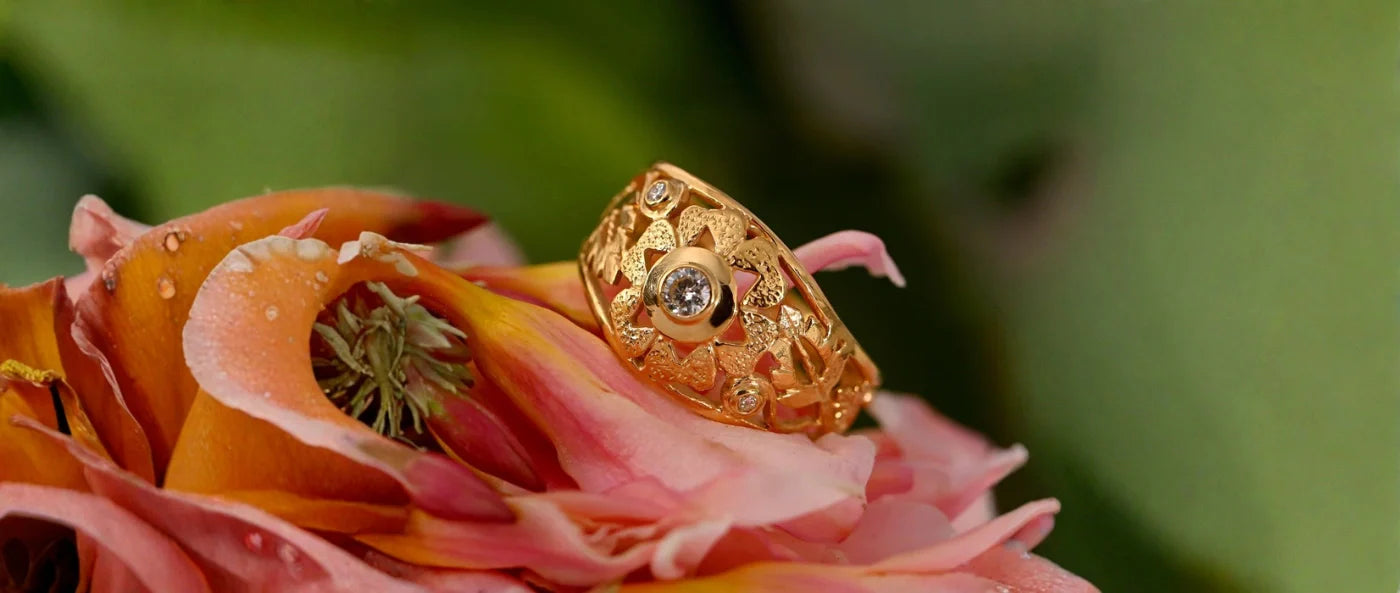
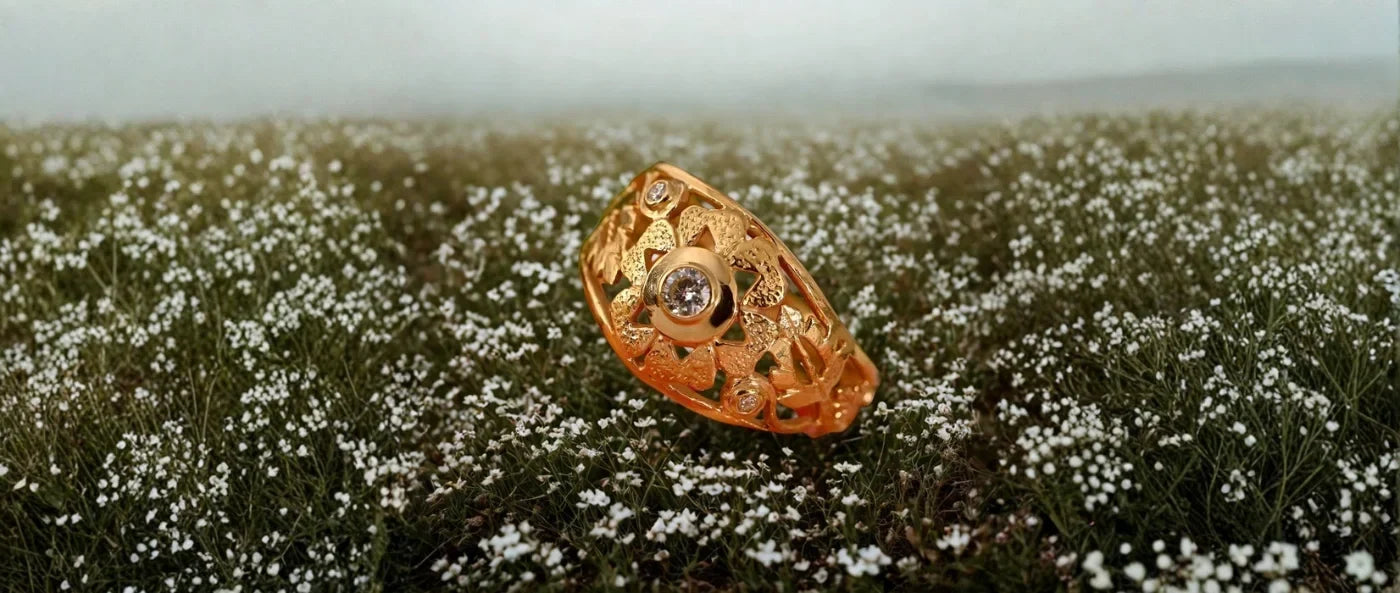
Deep, saturated stones set against warm, high-carat gold. Unlikely pairings that shouldn't work on paper but somehow feel entirely right on the hand. This is the mood in fine jewellery right now, and at Emma Chapman jewels, it's a mood we've been quietly building a wardrobe for since long before it had a name.
Why the Diamond Lost Its Monopoly
For years, the safe choice in fine jewellery was the clear stone - a diamond solitaire, a pastel-toned pendant, something that would blend quietly into any outfit without asking a single question. But safe and forgettable are close cousins, and a growing number of collectors and everyday wearers have started to notice the resemblance. Ready-to-wear fashion is faster and more disposable than it's ever been, and the pieces on the high street are, by design, made to look like the pieces next to them. Against that backdrop, vibrant gemstone jewellery trends have found an enthusiastic audience of people who want the opposite: something considered, something singular, something that couldn't have come from anywhere else.
This is the appeal of colour. A deep emerald, a fiery ruby, a lapis so blue it looks lit from within - these stones don't ask for permission to be noticed. They simply are noticed, and that's precisely the point.
What 'Expressive Colour Theory' Actually Means
It isn't about throwing colour at a piece and hoping it lands. Expressive colour theory, as we practise it, is about contrast with intent - pairing hues that sit in genuine tension with one another so the eye has to work a little, and rewards you for it. Think rich emerald green set against high-carat yellow gold, where the warmth of the metal makes the stone look almost lit from behind. Think ruby reds sitting beside deep, inky blues, two colours that have no business looking as good together as they do.
It's the jewellery equivalent of a considered wardrobe clash - the kind a stylist plans for hours to make look effortless. Nothing about it is accidental, and nothing about it is quiet.
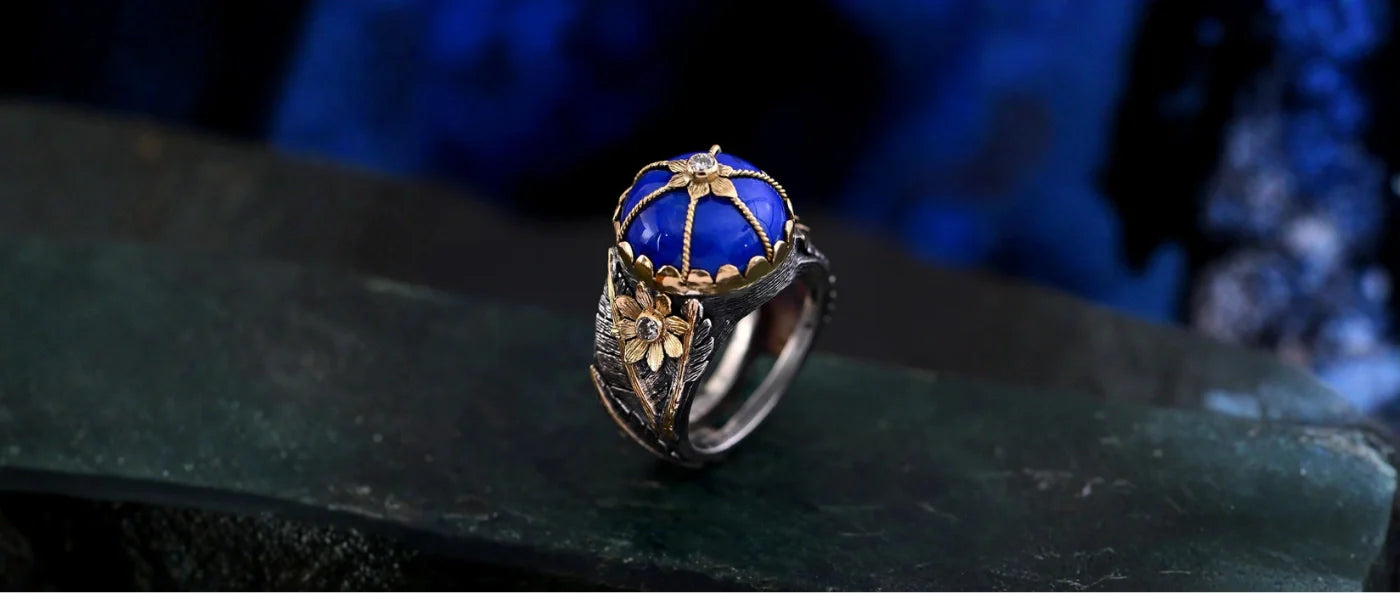
 Take our Lapis Lazuli Diamond Star Ring as a case in point. The lapis carries that near-mythical midnight blue that's been prized since the days of ancient Egypt, set into 18ct gold and studded with a diamond star motif that catches the light without ever stealing the scene from the stone itself. Hand-engraved floral detailing runs along the shank in oxidised sterling silver overlaid with gold - the kind of layered contrast that photographs beautifully but feels even better in person.
Reading the Stones: Why Colour Carries Meaning
Every coloured gemstone brings its own history to the piece it's set in, and part of what makes colour so compelling right now is that wearers are increasingly aware of it. Emeralds have long been linked with renewal and vitality, which is perhaps why emerald gold rings remain one of the most requested combinations in fine jewellery - the cool green against warm gold is a pairing that has endured for a reason. Rubies bring heat and confidence to a piece, tsavorites and rhodolite garnets add a sharper, more contemporary edge, and turquoise carries a talismanic quality that's been treasured across cultures for centuries.
None of these stones are trying to be diamonds. That's precisely why they work. A collection built around considered colour gives a piece a personality that a clear stone, however flawless, simply cannot replicate.
 Our Bella Ring is a good example of colour used with real confidence. A 9.11ct hand-carved aquamarine sits at the centre, flanked by rubies and vivid tsavorite garnets, all set into oxidised sterling silver overlaid with hand-engraved 18ct gold florals. The aquamarine's cool, oceanic blue against the warmth of the ruby is exactly the kind of unexpected pairing that expressive colour theory is built on - and because each piece is hand-carved, no two stones behave quite the same way under light.
Colour as Identity, Not Just a Statement Piece
There's a difference between wearing a statement piece and wearing a piece that says something about you specifically, and it's a distinction more people are starting to care about. Ready-to-wear fashion moves in seasons and trends that everybody has equal access to. A signature gemstone combination doesn't work that way. Once you've found the pairing that feels like yours - turquoise and tanzanite, ruby and midnight blue, moonstone and rose - it becomes less of an accessory and more of a visual shorthand for you.
That's the real shift happening in fine jewellery at the moment. It isn't simply that colour is fashionable again. It's that colour has become a way for wearers to opt out of sameness altogether, choosing pieces that couldn't be picked up off a shelf in any high street store.

The Liberty Ring plays with exactly this kind of layered identity. A central turquoise is surrounded by tanzanites and rhodolite garnets, all held within hand-engraved 18ct gold floral settings on an oxidised silver shank. Three distinct colour families - sky blue, violet-blue and warm plum - sit together in a way that feels curated rather than coordinated, which is the whole point of wearing colour with intention rather than caution.
The Investment Case for Colour
There's also a more practical conversation happening alongside the aesthetic one. Natural coloured gemstones of genuine quality - fine emeralds, untreated rubies, well-matched lapis or tanzanite - are becoming harder to source, not easier, as long-established mines are depleted and ethical sourcing standards rightly tighten. That scarcity is part of why colourful investment jewellery has become such a talking point among collectors who previously wouldn't have looked past a diamond. A handmade, one-of-a-kind piece set with rare natural stones simply cannot be replicated at scale, which gives it a kind of durability that mass-produced jewellery was never going to have.
This is where craftsmanship matters as much as the gemstones themselves. Hand-carving, hand-engraving and traditional goldsmithing take time that factory production doesn't allow for, and that time is exactly what turns a pretty ring into a piece with lasting value.
 The Chandra Pendant demonstrates this beautifully. A 19.8ct white moonstone of genuinely exceptional quality sits at its centre, flanked by cabochon rubies set into hand-engraved 18ct gold flowers, with hand-engraved leaf detailing running through the oxidised silver. It's finished on a moonstone and tourmaline chain, so the colour story continues right down to the clasp rather than stopping at the pendant itself. Pieces built this way, with this level of attention, are exactly the kind that collectors hold onto rather than trade in.
How to Wear Bold Colour Without Letting It Wear You
The instinct with strong colour is often to tone everything else down around it, and that instinct is usually right - but not always necessary. A single striking pendant can sit happily against plain black or cream, letting the stones do all the talking. Equally, a considered colour piece can be layered with others in the same family, so a turquoise pendant and a lapis ring aren't fighting for attention but rather building on each other, the way a well-planned outfit does.
The rule we'd suggest, if there has to be one, is to let one piece lead. Everything else - the rest of the jewellery, the outfit, even the occasion - can then be built around that lead piece rather than competing with it.

The Ocean Pendant is a natural lead piece. A central turquoise is surrounded by green tourmalines and capped with a diamond, set in 18ct gold and oxidised sterling silver with hand-engraved floral and leaf motifs, and finished with a handmade turquoise and silver beaded chain. It also comes with matching earrings and a matching ring, for anyone who wants to build a fuller colour story rather than wearing a single piece in isolation.
The Takeaway
Clear diamonds will never go away, and there's no need for them to. But the current mood in fine jewellery belongs to colour - considered, contrasting, occasionally unexpected colour that gives a piece a personality of its own rather than asking it to disappear into an outfit. Every piece at Emma Chapman jewels is handmade in our own workshops, which means the gemstone combinations you see are genuinely one-of-a-kind rather than a repeatable formula. If you're drawn to vibrant gemstone jewellery trends but haven't yet found the pairing that feels like yours, our bespoke service can help you build a piece around the exact stones and story you have in mind.
Frequently Asked Questions
1. What is 'expressive colour theory' in jewellery?
It's an approach to design that pairs bold, contrasting gemstone colours - such as emerald green against yellow gold, or ruby red beside deep blue - rather than relying on matching or muted, pastel tones. The aim is a piece with genuine visual character.
2. Why are coloured gemstones becoming more popular than diamonds?
Diamonds are colourless by design, which makes them versatile but also fairly interchangeable. Coloured stones like emeralds, rubies and lapis lazuli give a piece a distinct identity, and as ready-to-wear fashion becomes more uniform, that individuality has become more desirable.
3. Are coloured gemstones a good investment?
Fine, natural coloured gemstones are becoming harder to source as established mines are depleted, and well-crafted, one-of-a-kind pieces tend to hold their value better than mass-produced jewellery. As with any investment, quality, provenance and craftsmanship all matter, so it's worth buying from a maker you trust.
4. What gemstone pairings work well together?
Some of the most striking combinations include emerald with high-carat yellow gold, ruby with deep blue stones such as tanzanite or lapis, and turquoise with warm tones like garnet. The strongest pairings tend to sit in gentle contrast rather than close harmony.
5. Is oxidised silver the same as tarnished silver?
No. Oxidising is a deliberate finishing technique that darkens sterling silver to create depth and contrast against gold detailing and gemstones. It's a design choice, not a flaw, and it won't continue to darken the way genuine tarnish would.
6. Can Emma Chapman jewels pieces be resized?
Most rings can be resized on request. As each piece is handmade and often one-of-a-kind, it's best to email info@emmachapmanjewels.com before ordering so sizing can be confirmed for that specific piece.
7. How do I care for coloured gemstone jewellery?
Store pieces separately to avoid scratching, avoid direct contact with perfume or household chemicals, and remove jewellery before swimming or exercising. Softer stones such as turquoise and moonstone benefit from particular care, so avoid ultrasonic cleaners unless you've checked with the maker first.
8. What makes a piece 'one-of-a-kind'?
Because our pieces are handmade and hand-carved in our own workshops using natural gemstones, no two stones are ever perfectly identical. Once a piece is sold, it isn't remade, which is part of what gives it lasting value.
9. Can I commission a bespoke piece in my own colour combination?
Yes. Emma Chapman works directly with clients to design bespoke pieces built around chosen gemstones, colours and settings. Bespoke pieces typically take between two and eight weeks, depending on the design.
10. Do bold, colourful pieces suit everyday wear or special occasions only?
Both. A single considered piece - a pendant or a ring - can be worn daily against simple clothing, while layering several colour pieces together tends to suit dressier occasions. It really comes down to how much of the colour story you want to tell at once.