The Anti-Bridal Revolution: Why Alternative Engagement Rings Are the New Heirlooms
For the better part of a century, the engagement ring conversation in Britain followed a fairly predictable script. A round or princess-cut diamond, a claw setting, a band that looked much like the one before it and the one after. It was safe. It was recognisable. And for a long time, it was simply what you did.
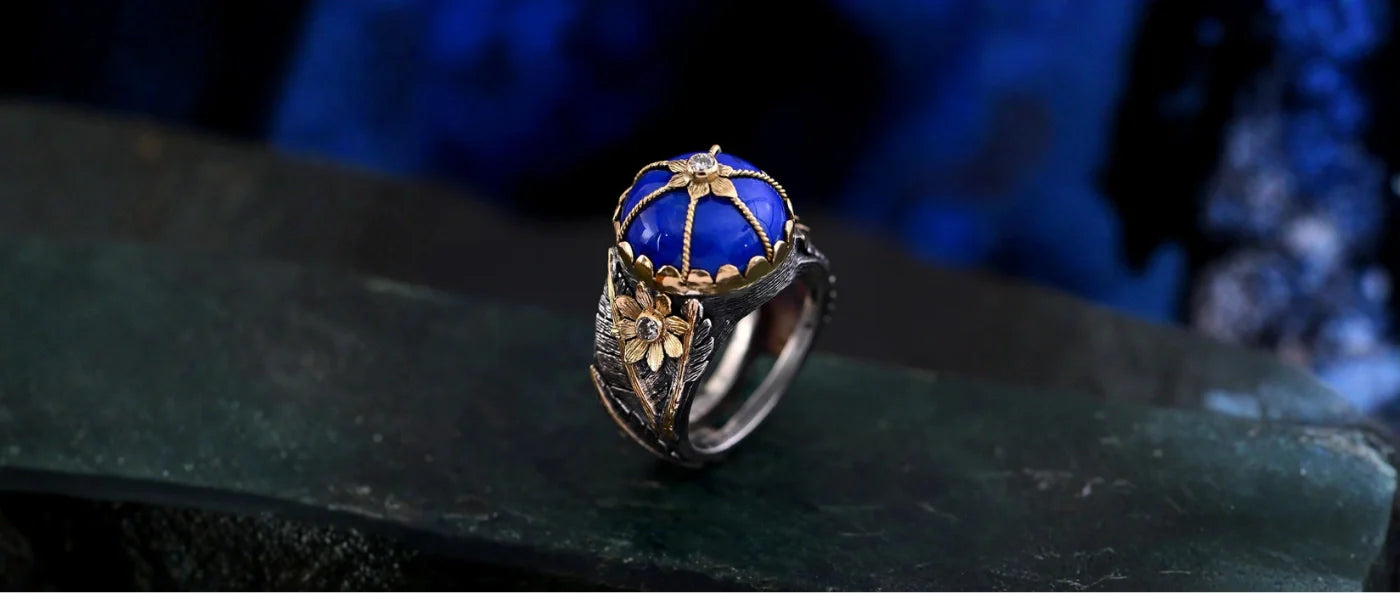
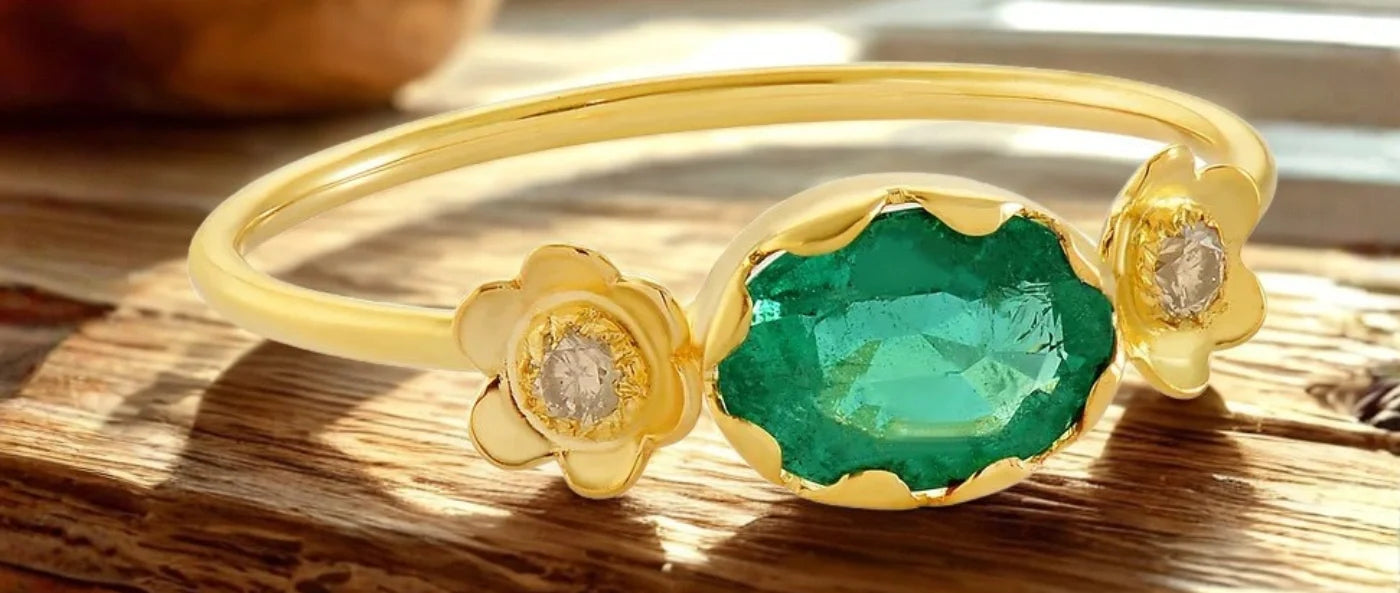
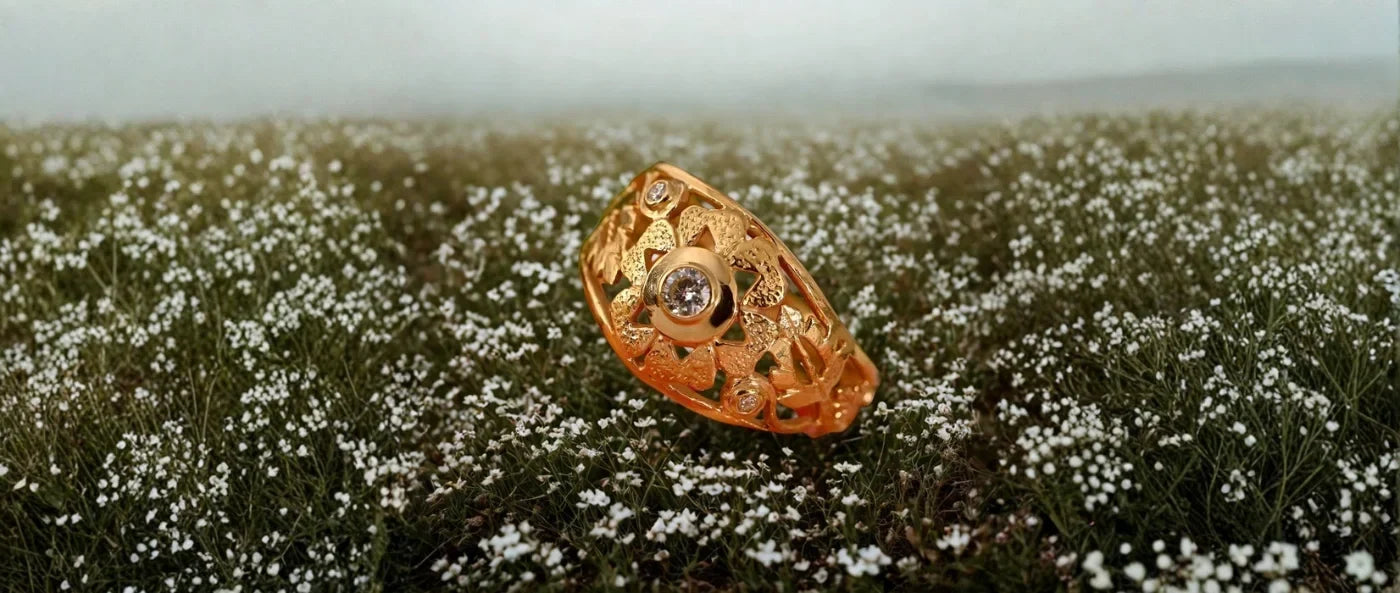
That script is being rewritten. Walk through any 2026 engagement announcement on Instagram and you'll notice something has shifted — hand-carved emeralds sitting beside intricate Mughal-inspired jaali work in warm 18ct gold, kundan settings that catch candlelight rather than fluorescent shop lighting, rings that look less like they came off a velvet tray and more like they were pulled from a family archive that never actually existed, but somehow should have. Alternative Bridal Jewellery is no longer a niche preference for the artistically inclined — it's fast becoming the expected choice for couples who simply refuse to let a ring speak for anyone but themselves.

This is the anti-bridal revolution, and it isn't really about rejecting tradition at all. It's about rejecting conformity dressed up as tradition.
View our latest collection here: https://emmachapmanjewels.com/collections/handmade-bridal-jewellery
The Fall of the Showroom Solitaire
There's nothing wrong with a diamond, and there's nothing wrong with wanting one. The issue was never the stone — it was the sameness. For decades, walking into a jeweller's meant choosing from a handful of nearly identical settings, differentiated mostly by carat weight and price tag. The ring was meant to say "engaged." It was rarely allowed to say anything more specific than that.
Today's couples tend to have very different lives than the ones this old system was built around. They've backpacked through Rajasthan, fallen for a Byzantine mosaic in an Istanbul museum, spent a weekend getting lost in a Lisbon flea market looking for exactly one perfect, odd little object. Naturally, they want a ring that reflects that same instinct — something with texture, history, and a bit of soul, rather than something that reads as generic no matter how large the stone.

What Is a Narrative Engagement Ring?
We'd call it a narrative engagement ring — a phrase that describes exactly what these pieces do differently. Rather than being built around a single specification (cut, clarity, carat), a narrative ring is built around a story. Perhaps it's a gemstone chosen because it matches the exact shade of a sunset from the trip where the proposal happened. Perhaps it's a hand-engraved band inspired by architecture the couple fell in love with together. The carat size becomes almost incidental; what matters is whether the ring feels unmistakably theirs.
This is where Unique Engagement Rings genuinely start to separate themselves from the mass-produced alternative. A piece with soul doesn't need to shout. It simply needs to mean something the moment you look at it.
Ancient Techniques, Reimagined for Modern Love
Part of what makes this shift so compelling is the craftsmanship behind it. Techniques like Mughal-inspired jaali work — delicate, lattice-like piercing through gold that historically decorated palace windows and jewellery alike — bring an intricacy that machine-made settings simply cannot replicate. Kundan work, an ancient Indian technique of setting gemstones in pure gold foil, gives stones a warmth and depth that modern prong settings tend to flatten out.

Hand-engraving and stone-carving add another layer entirely. A hand-carved emerald, shaped by a master goldsmith rather than a machine, carries the very faint, very human imperfections that make it unrepeatable. No two hand-carved stones are ever quite identical, which is precisely the point. This is Handmade wedding jewellery in the truest sense of the phrase — not simply assembled, but genuinely made, often over weeks rather than minutes.
Beyond the Diamond: The Rise of Colour
Emeralds have become something of a signature stone within this movement, and it's easy to understand why. Rich, deep, and steeped in centuries of history across Mughal and European royal jewellery alike, an emerald carries a kind of gravity a clear diamond doesn't quite reach. Sapphires, tourmalines, and richly hued garnets are following closely behind, each offering something a colourless stone simply can't: a ring that's identifiable at a glance, long before anyone gets close enough to check the clarity.
None of this is to say diamonds are being abandoned altogether. Diamond Engagement Rings remain deeply loved, and for many couples, a diamond still carries exactly the meaning they're looking for. What's changed is the setting around it. Diamond Engagement Rings for Women today are far more likely to feature hand-engraved bands, unexpected cuts, or a mix of stones rather than a single, solitary gem sitting alone on a plain gold shank.
See collection: https://emmachapmanjewels.com/collections/engagement-rings
Diamonds, Reimagined Rather Than Replaced
For couples who want the timelessness of a diamond alongside the individuality of a bespoke piece, Engagement Rings with Diamonds set within Mughal-inspired florals or old mine cut stones nestled into hand-carved gold offer a genuine middle ground. These aren't compromises — they're arguably the best of both instincts, giving Women's Engagement Rings the durability and sparkle diamonds are famous for, without sacrificing the individuality that defines this entire movement.
 A Diamond Women's Engagement Rings collection built this way tends to age beautifully too, both in style and sentiment. Trends built purely around size or shape fade quickly. Pieces built around craftsmanship and story simply don't.
Choosing a Ring That Actually Tells Your Story
If you're searching for Unique Engagement Rings Uk-wide, the real question worth asking isn't "what's trending this season" but "what would still feel like us in twenty years." A ring inspired by a place you've travelled together, a colour that means something private between the two of you, or a technique tied to a heritage one of you carries — these are the details that hold up long after wedding trends have quietly moved on.
This is also where working directly with a designer, rather than choosing from a fixed catalogue, makes the biggest difference. A conversation about your story can shape a setting, a stone choice, or a technique in ways a showroom simply isn't built to accommodate.
Why Handmade Craftsmanship Matters More Than Ever
There's a growing appreciation, particularly among couples marrying in the next few years, for pieces that were actually made by hand rather than cast en masse. Handmade Bridal Jewellery carries a certain integrity that mass production can't fake — every hammer mark, every hand-set stone, every slightly asymmetrical engraved line is proof that a real person spent real hours on this one specific object, meant for one specific couple.

The same appreciation extends beyond engagement rings into wider bridal pieces too. Handmade Bridal Pendants and Earrings, worn by a bride on her wedding day or gifted to her closest attendants, carry that same sense of personal meaning — they have stones chosen not because they are on trend but for connection, which are set by hand rather than stamped from a mould.
The Emma Chapman jewels Approach
At Emma Chapman jewels, every engagement ring begins the same way — not with a catalogue number, but with a conversation. Working from Jaipur and London workshops using 18ct and 14ct gold, our master goldsmiths bring together hand-engraving, enamel work, Mughal artistry, kundan, jaali, and stone-carving to create pieces that genuinely cannot be replicated elsewhere. Precious gemstones including emeralds, sapphires, rubies, tourmalines, and diamonds are frequently cut especially for the design they're destined for, rather than chosen from a pre-cut stock.
It's an approach built on the belief that an engagement ring shouldn't just mark a proposal — it should carry the story of it. That's the difference between a ring you wear and a ring you'll one day hand down.
Looking for something unmistakably yours? Explore our Bespoke Commission Service to collaborate directly with Emma Chapman jewels to design an alternative engagement ring rooted in ancient heritage and your personal story.
Frequently Asked Questions
1. What exactly counts as an alternative engagement ring?
It's any ring that steps away from the traditional single round or princess-cut diamond on a plain band. This can mean a coloured gemstone like an emerald or sapphire, an antique-inspired cut, hand-engraved detailing, or techniques such as jaali or kundan work. The common thread is individuality — a piece designed to feel personal rather than replicated from a standard template.
2. Are alternative gemstones like emeralds and sapphires durable enough for everyday wear?
Sapphires rank extremely high on the hardness scale and are genuinely excellent for daily wear, often rivalling diamonds in durability. Emeralds are slightly softer and more prone to natural inclusions, so they benefit from a protective setting and a little extra care, but with proper handling, they hold up beautifully as an everyday engagement ring.
3. Is a coloured gemstone engagement ring considered less traditional or less serious?
Not at all — coloured gemstone rings have a history stretching back centuries, long before the diamond solitaire became the default choice in the twentieth century. Sapphires, emeralds, and rubies have adorned royal and aristocratic engagement rings for generations, so choosing colour is arguably a return to a much older tradition rather than a departure from one.
4. What does Mughal-inspired jaali work actually involve?
Jaali refers to an intricate lattice or perforated pattern, historically used in Mughal architecture and jewellery alike. In ring design, it involves delicately piercing and shaping gold into detailed openwork patterns by hand, creating a lightweight yet visually rich design that catches light in a way solid metal simply can't.
5. How long does a bespoke engagement ring typically take to create?
Bespoke pieces generally take several weeks from initial consultation to completion, depending on the complexity of the design, the techniques involved, and whether a gemstone needs to be specially sourced or cut. Hand-carved or heavily engraved designs naturally take longer than simpler settings, given the level of manual craftsmanship involved.
6. Can I combine diamonds with coloured gemstones in one ring?
Yes, and it's an increasingly popular choice. Pairing a central coloured stone with diamond accents, or setting diamonds within a hand-carved floral or Mughal-inspired design, gives you the brilliance and durability diamonds are known for alongside the individuality a coloured gemstone brings to the overall design.
7. How do I start the process of designing a bespoke engagement ring?
It typically begins with a conversation rather than a catalogue — discussing the story you want the ring to carry, any gemstones or colours with personal meaning, and the overall style you're drawn to. From there, a designer can guide you through gemstone options, metal choices, and craftsmanship techniques before any physical work begins.
8. What's the difference between kundan and traditional prong settings?
A prong setting holds a stone in place using small metal claws, leaving much of the gemstone exposed. Kundan is an older technique where a stone is set directly into pure gold foil, creating a smoother, more embedded look with a warmer glow around the stone. It's a slower, more labour-intensive process, but the resulting depth and richness are hard to replicate any other way.
9. Are handmade engagement rings more expensive than mass-produced ones?
Generally, yes, though the difference reflects the time, skill, and individual attention involved rather than simple markup. A handmade piece involves a goldsmith's hours, often a specially cut or carved stone, and techniques that can't be automated, all of which contribute to a ring that's genuinely one of a kind rather than one of thousands.
10. Can antique-inspired techniques like stone-carving be used on any gemstone?
Most durable gemstones can be hand-carved, though the technique tends to work best on stones with enough hardness and clarity to hold intricate detail without cracking, such as emeralds, quartz varieties, and certain sapphires. A skilled goldsmith will usually advise on which stones suit carving best based on the specific design in mind.